
Details Description Of Basics, History, And How Many Numbers On A Roulette Wheel?
By Sarah Cole · July 2021 · 9 min read

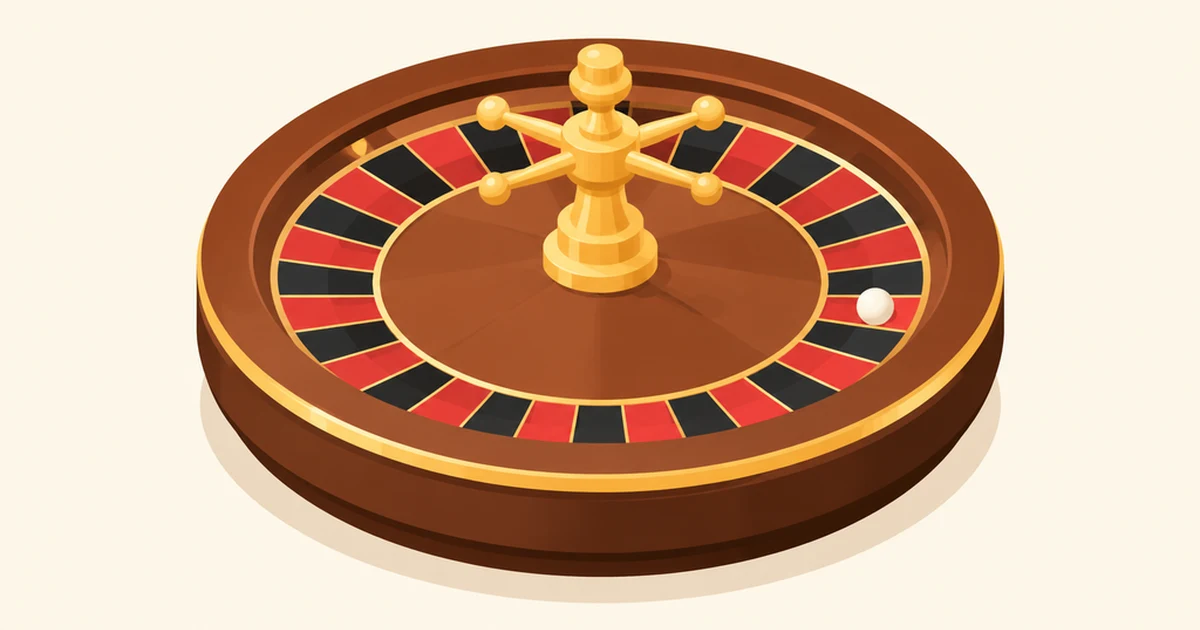
What Is a Roulette Wheel?
A roulette wheel is a spinning disc with numbered pockets. A small ball is released onto the wheel. The ball settles in one pocket. That number wins. The game is simple to follow. The wheel and the betting layout do the rest.
Players place chips on the table before the spin. Bets can cover one number or many. The croupier spins the wheel. When the ball drops, losing bets are cleared. Winning bets are paid at fixed odds. A round is quick.
Roulette is a game of chance. Each spin is independent. Past results do not change the next result. A number that just appeared has the same chance again. This is true on every wheel.
How Many Numbers Are on a Roulette Wheel?
The answer depends on the wheel. The European wheel has 37 pockets. These are numbered zero to thirty-six. Zero is green. The other numbers are split into eighteen red and eighteen black pockets.
The American wheel has 38 pockets. It adds a double zero pocket. That extra pocket is the main difference between the two games. The French wheel uses the same layout as the European wheel. It also adds special rules on even-money bets.
So the pocket count differs by one. That single pocket changes the maths of the game, and it also changes the house edge, which is why the choice of wheel matters so much to your budget over a long session. Some casinos also run a triple-zero wheel. Wikipedia lists a still higher single-number house edge for it, shown in the chart further down.
How the Pockets Are Arranged Around the Wheel
The numbers do not run in order round the wheel. Wikipedia prints the clockwise sequence for both wheels. The wheel order looks nothing like the order on the table.
Colours follow a pattern. Checking Wikipedia's single-zero sequence against the standard red and black numbers, red and black pockets alternate all the way round, with the green zero sitting between one red and one black pocket. In the American order the double zero sits opposite the single zero, so the two green pockets are on opposite sides of the wheel.
On the table the numbers 1 to 36 are laid out in a grid of three columns and twelve rows. That grid is what makes column bets and dozen bets possible. Wikipedia notes that the colours do not simply alternate on the grid itself. In the low ranges odd numbers are red and even numbers black, and in the middle ranges it is the other way round.
European vs American Wheel
The table below shows the key differences. The numbers are small but they matter over time.
| Feature | European | American |
|---|---|---|
| Pockets | 37 | 38 |
| Zero pockets | 1 (0) | 2 (0, 00) |
| House edge | 2.70% | 5.26% |
The European edge comes from its single zero. The American edge comes from its two zeros. The payouts on the standard bets are the same on both wheels, apart from the top line bet. That is why the American game costs more to play.
French roulette adds La Partage and En Prison. These rules apply to even-money bets. They cut the edge to roughly half the single-zero figure. That makes French roulette the cheapest of the three for those bets.
Wizard of Odds and Wikipedia
House edge by roulette layout and rule
La Partage and En Prison Explained
Both rules deal with the same situation. You have a bet on an even-money outside bet such as red, black, odd, even, low or high, and the ball lands on zero. Normally the bet simply loses.
With La Partage you lose only half the bet and get the other half back. Wizard of Odds states that this cuts the house edge on even-money bets to the figure in the chart above.
With En Prison the bet is held, or imprisoned, for the next spin. If the held bet wins on that spin, it is released and returned without winnings. Wizard of Odds notes that the casino's own rules decide what happens if zero comes up again. Wikipedia puts the edge under En Prison on a single-zero wheel in a narrow range just above that.
Neither rule helps on straight-up bets or other inside bets. They are limited to the outside bets that pay even money, and they depend on the casino offering them, so check the game rules before you sit down.
A Short History of Roulette
Many historians credit Blaise Pascal with a primitive form of roulette in the seventeenth century. Wikipedia also describes the first form of the game as devised in eighteenth-century France, and says it has been played in its present form in Paris since as early as 1796. The early origin story is a popular account and is not settled.
In 1843 François and Louis Blanc introduced the single-zero wheel at Bad Homburg in Germany, to compete with casinos using wheels with both a single and a double zero. Legal gambling at Bad Homburg ended in the 1860s, and the Blanc family moved to Monte Carlo. Wikipedia's wheel sequences give the single-zero layout as the European one and the double-zero layout as the American one.
Wikipedia adds one colour detail. Early Paris wheels used red for the single zero and black for the double zero, and green was adopted during the 1800s to avoid confusion.
That split still shapes the game. When you open an online roulette game, check which wheel it uses.
Inside Bets and Outside Bets
Roulette bets fall into two groups. Inside bets cover numbers. Outside bets cover groups such as colours and dozens. Each bet has its own payout.
Bets that cover fewer numbers pay more. The table below lists each bet, how many numbers it covers, what it pays and how often it wins. The win chances are simple counts of pockets, the numbers covered out of 37 or 38.
Outside bets cover many numbers at once, so they win more often and pay less. When the ball lands on zero, the bets in this table lose, except that La Partage or En Prison may soften the even-money ones.
| Bet | Numbers covered | Payout | Wins on a 37-pocket wheel | Wins on a 38-pocket wheel |
|---|---|---|---|---|
| Straight up | 1 | 35:1 | 1 in 37 | 1 in 38 |
| Split | 2 | 17:1 | 2 in 37 | 2 in 38 |
| Street | 3 | 11:1 | 3 in 37 | 3 in 38 |
| Corner | 4 | 8:1 | 4 in 37 | 4 in 38 |
| Six line | 6 | 5:1 | 6 in 37 | 6 in 38 |
| Dozen or column | 12 | 2:1 | 12 in 37 | 12 in 38 |
| Even-money bet | 18 | 1:1 | 18 in 37 | 18 in 38 |
One American bet stands apart. The five-number bet, also called the top line, covers zero, double zero and the numbers one, two and three, and pays six to one. Wizard of Odds lists a house edge for it that is higher than every other bet on that wheel, because 6:1 does not match the true odds as closely as the other payouts do.
Call Bets on a European Wheel
Some tables let you place announced or call bets. Instead of pointing at chips on the grid, you name a section of the wheel and the croupier places the chips for you. Wikipedia describes four of them.
- Voisins du zéro: 17 numbers, covered with nine chips.
- Tiers du cylindre: 12 numbers, covered with six chips.
- Orphelins: 8 numbers, covered with five chips.
- Jeu zéro: 7 numbers (12, 35, 3, 26, 0, 32 and 15), covered with four chips.
Wizard of Odds lists the same edge for all bets on a single-zero wheel, so naming a section of the wheel does not make the bet cheaper or dearer.
How the House Edge Works
On the standard wheels the house has an edge on every bet. The European figure in the table is the lower one, and the American figure is nearly double it. The edge is built into the payouts. A winning straight-up bet pays 35 to 1, but the true odds are 36 to 1 on a single-zero wheel.
That gap is the house edge, and it applies to every bet on the layout, so the size of the bet and the number of spins never change the percentage that the house keeps over time.
A worked example shows what the percentages mean. Suppose you stake ten units on each of one hundred spins, so a thousand units in total. At the European rate the expected loss is about 27 units. At the American rate it is about 53 units. This is arithmetic on the long-run average. Any real session can finish well above or well below it.
No system beats the edge. Martingale and other staking plans change the size of your bets. They do not change the expected loss. Wizard of Odds quotes Encyclopedia Britannica on the doubling system. In the long run it cannot overcome the house's advantage of the zero, or zero and double zero. Wikipedia makes the same point, saying that no strategy can statistically overcome the casino's advantage because every allowed bet has a negative expected value. A long session on an American wheel costs more than the same session on a European wheel.
How Many Numbers Should You Bet?
There is no single right answer. It depends on your bankroll and your appetite for risk. Covering many numbers raises how often you win. Each win pays less. The expected loss per spin stays the same percentage of the total staked.
A wide bet spread gives frequent small wins. A narrow spread gives rarer, larger wins. Neither approach changes the edge. Pick the style you enjoy and can afford.
If you want the lowest cost per spin, choose European or French roulette, and avoid the American wheel unless you like its layout, because the extra zero pocket adds a lot to the long-term cost of play. Online casinos offer RNG roulette and live dealer roulette, so check the rules of the table, because the wheel type sets the edge.
Roulette and bonuses do not always mix. Casinos may restrict games from counting toward wagering, and Wikipedia says low-edge games can be among those excluded. Read the terms before using bonus money on a wheel, and see our guide to wagering requirements for how contribution works.
Set a budget before you play. Treat the money as the cost of entertainment. The wheel will do what it does. The edge will do what it does.
Frequently Asked Questions
How many numbers are on a roulette wheel?
A European wheel has thirty-seven pockets, numbered zero to thirty-six. An American wheel has one more because it adds a double zero.
Which roulette wheel is better for players?
The European wheel has the lower house edge. The American wheel costs close to twice as much per spin. French rules roughly halve the cost of even-money bets.
Do past numbers predict the next spin?
No. Each spin is independent. Hot and cold numbers are a myth. The odds stay the same on every spin.
What is the difference between La Partage and En Prison?
Both apply to even-money bets when the ball lands on zero. La Partage returns half of your stake straight away. En Prison holds the whole bet for one more spin and releases it, without winnings, if it wins.
Is the American five-number bet worth it?
It costs more than any other bet on the American layout, according to the edge Wizard of Odds lists for it.
Players must be 18 or older to gamble.